We Tested Facebook Fan Challenges So You Don’t Have To (Yet)
By Audrey Robison, Project & Social Media Coordinator
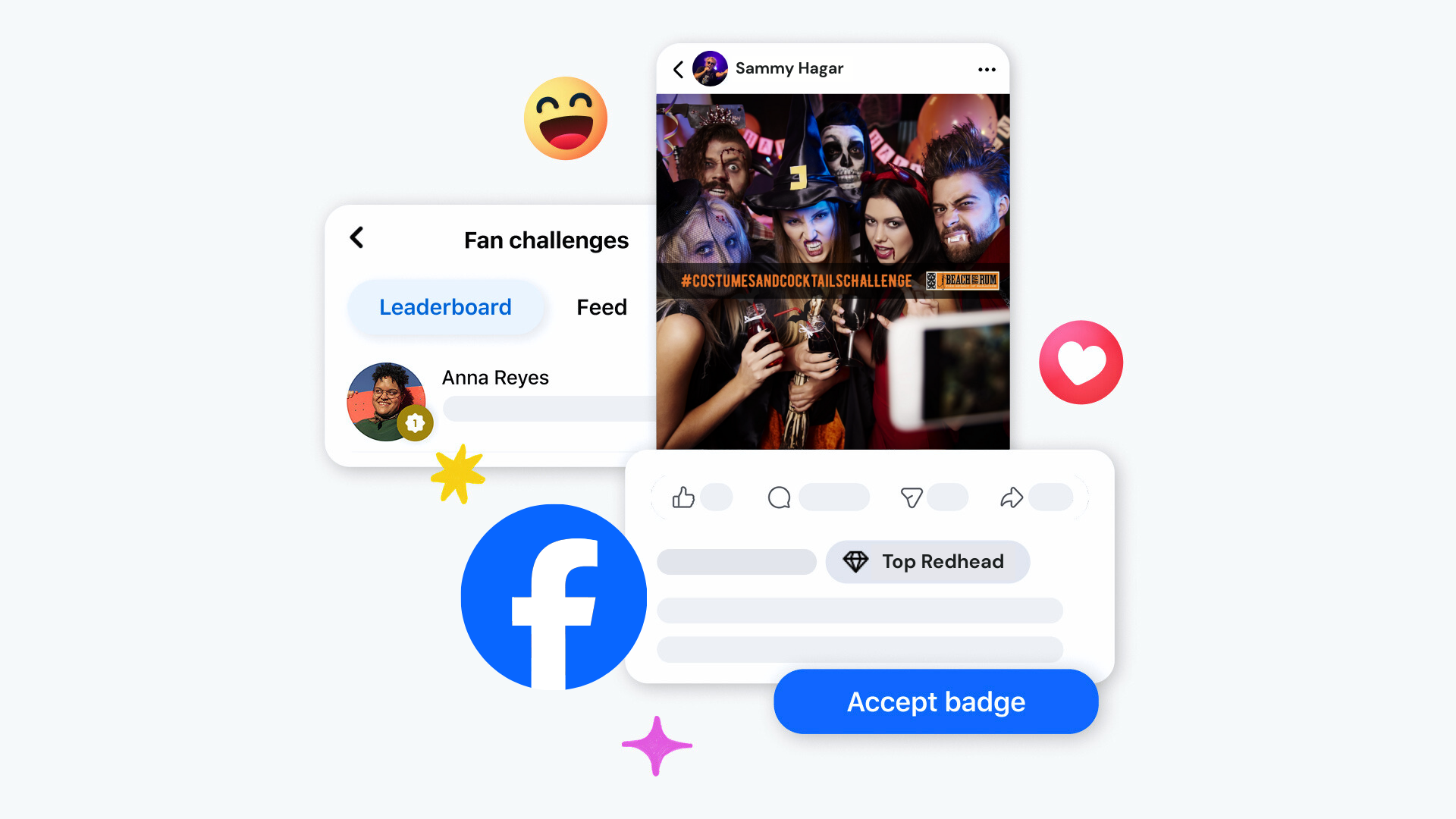
Recently, Meta rolled out Fan Challenges, a new engagement feature on Facebook that some industry voices have been touting as the next big engagement engine – citing stats like “1.5 million entries and 10 million reactions in three months.”
While those headlines are catchy, we wanted to see if the reality actually matched the hype. In October, we launched our own challenge to test it out.
We chose a “Costumes and Cocktails” challenge for Sammy’s Beach Bar Rum over Halloween to test engagement, reach, and brand alignment firsthand. Due to some limitations of the feature, we had to shift gears slightly. Let’s break down the process:
1. Mobile-Only Creation
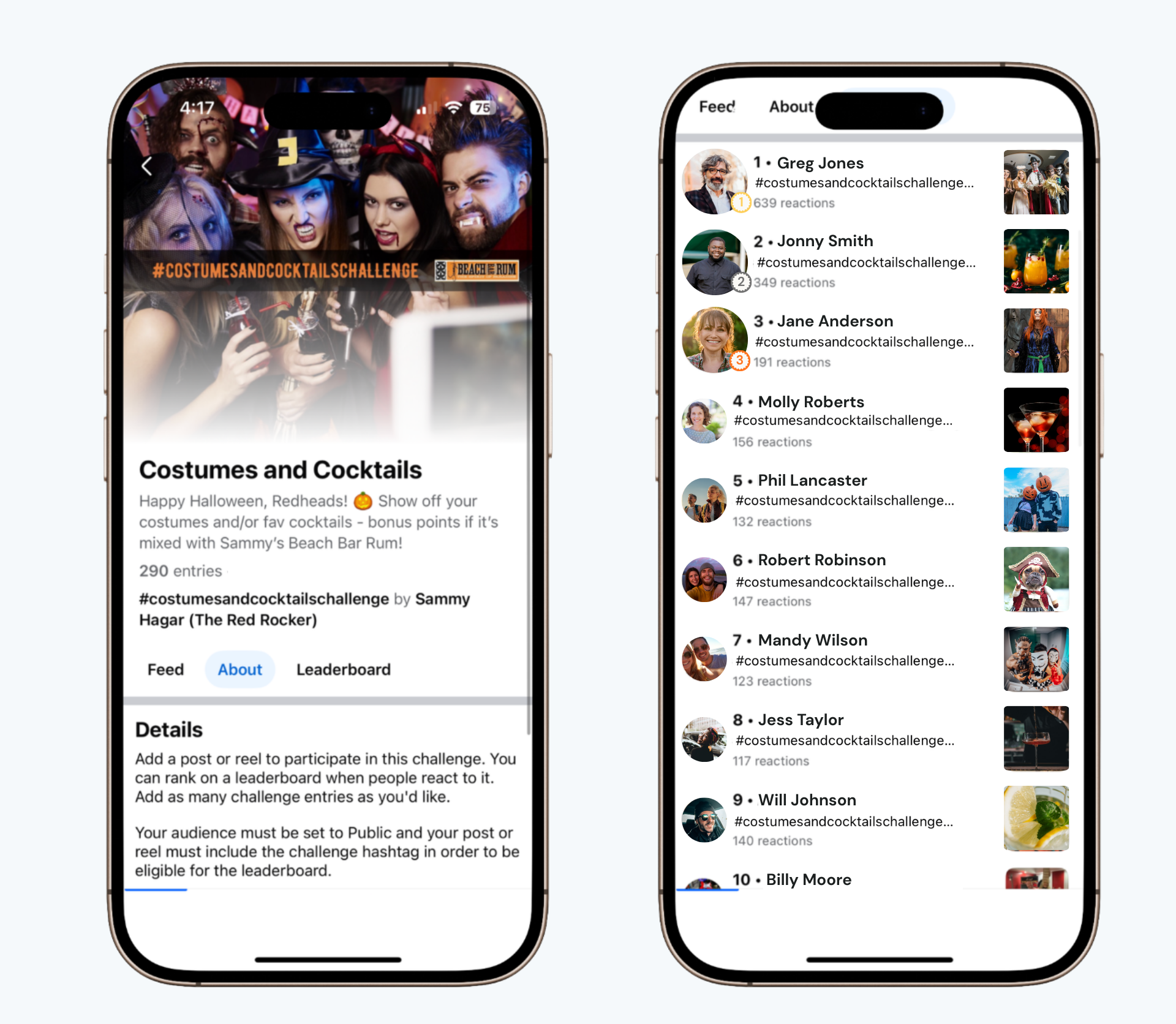
Like most agencies, we lean heavily on desktop tools for social media scheduling, which is why we were surprised that Meta decided you must build and launch Facebook challenges entirely via the Facebook mobile app (and no, you can’t schedule it through Meta Business Suite either). As a result, you’ll need to have all final images and copy on your phone before you begin. This is less of an issue if your team uses a cloud server accessible from your device, but otherwise you’ll need to AirDrop or email the files to yourself first: there’s no way to adjust assets from your desktop at any point.
2. 100k Followers
If you’re a small or mid-sized brand hoping to use Fan Challenges to grow, you’re basically out of luck here. Unfortunately, pages with fewer than 100,000 followers won’t have access to see this feature. For our experiment, because the brand’s main page didn’t meet this threshold yet, we had to pivot and run the campaign on an associated profile (Sammy Hagar’s) that met the criteria.
3. Auto-Cropping
We couldn’t find any detailed design guidelines before we made our contest, so we ended up going into it completely blind. This ended up being an exercise in frustration.
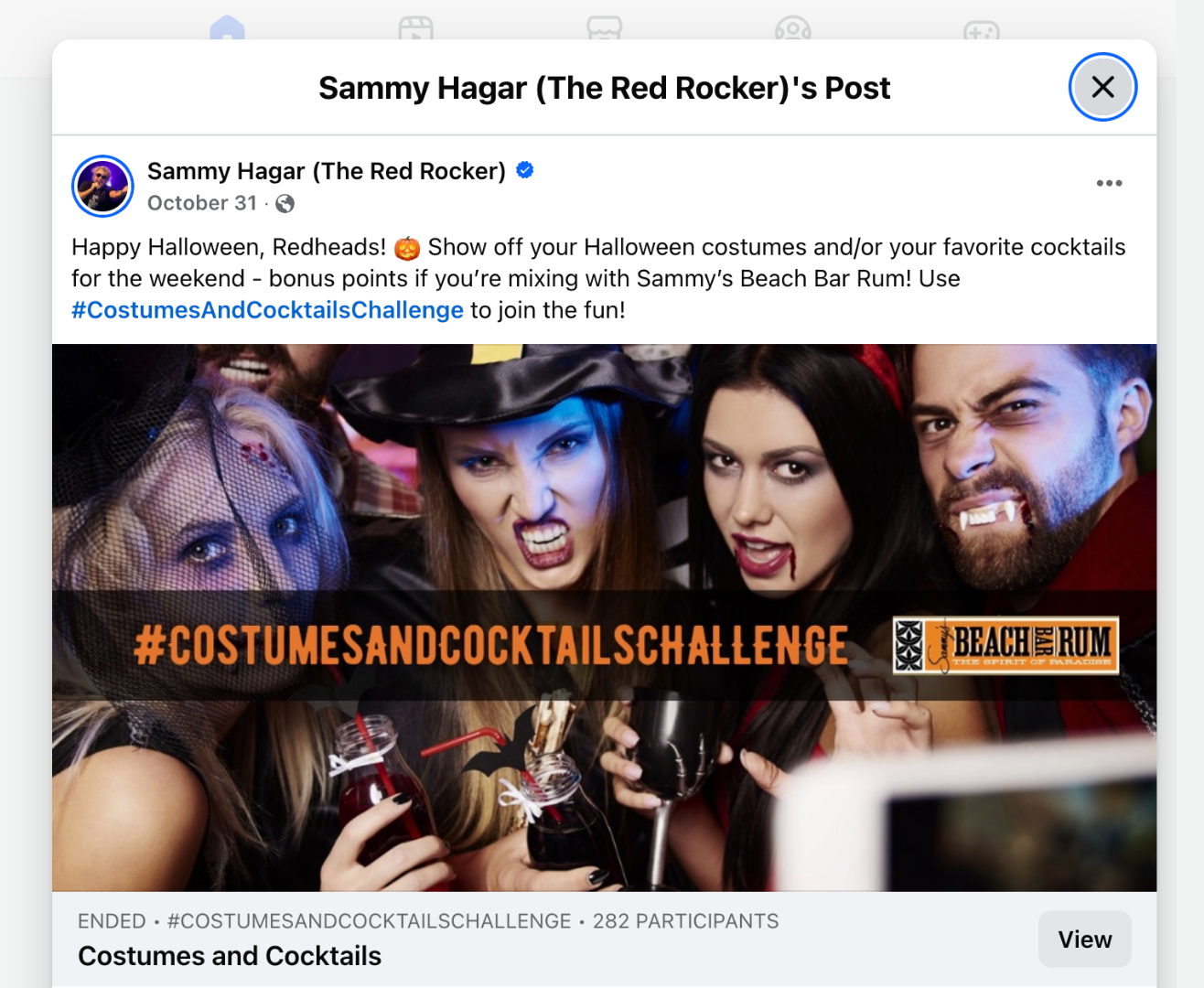
The Issue: On the Challenge creation page, your cover art displays as a 1:1 Square. But when that challenge hits the News Feed, Facebook auto-crops it to a horizontal (landscape) ratio.
If you don’t account for this, you risk getting your text and design chopped off – which ended up happening to us. We had to go back to the drawing board and re-design our main text within a “safe zone,” keeping all logos and copy in a centered horizontal strip so the creative works in both formats.
4. Quality of Fan Submissions
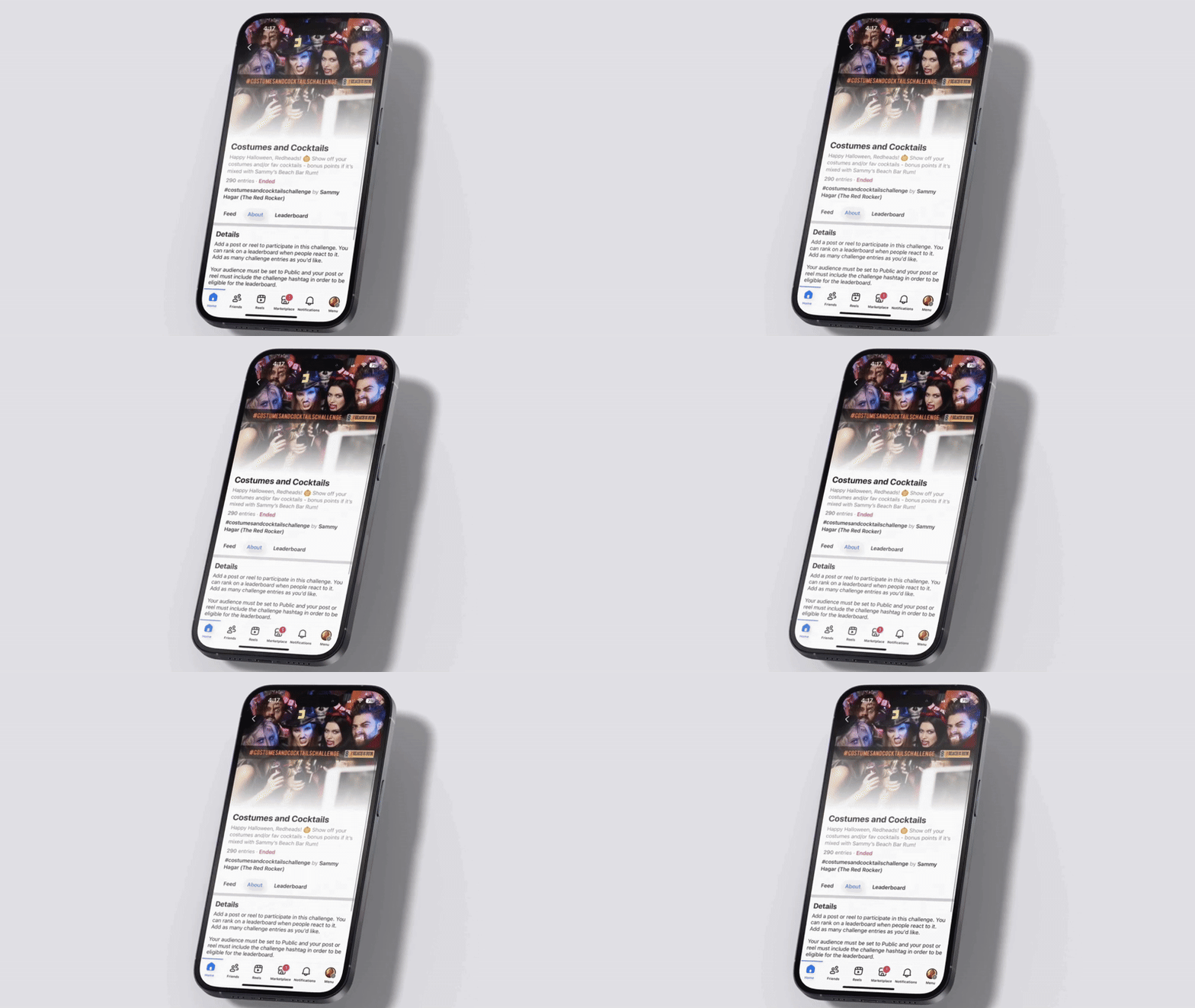
Once we posted the challenge, fan entries started rolling in fairly immediately. However, we quickly realized that the submissions didn’t exactly align with Meta’s vision to “invite fans into the creative process” (i.e., get free UGC). Overall, we received nearly 300 entries – a decent success in volume. However, the vast majority were casual and low-fidelity snapshots. We didn’t walk away with some amazing library of assets to repurpose for the brand, but we did get reasonable reach with 97k views on the challenge page. And, while the challenge didn’t bring in many new followers (90% of activity was from the existing community), it woke up our current audience and drove some worthwhile engagement and visibility.
5. Leaderboard “Wild West”
Unfortunately, Meta has given brands zero control over the leaderboard. The ranking system is based purely off of popularity (the number of reactions to each submission). You can imagine how easy it is for challenges to be manipulated. An unrelated meme might win just because it’s funny, or a popular influencer could simply add the contest hashtag to a viral post and dominate the leaderboard. Since all submissions are public, this is a real possibility. We’ve seen many challenge leaderboards, such as the one for the Backstreet Boys Sphere challenge, dominated by unrelated or low value submissions.
6. The Results
Our “Costumes & Cocktails” Facebook Fan Challenge did engage the existing community with most participation coming from existing followers. However, despite this participation, the content generated was largely low value. In fact, only one submission featured the core brand element (both a costume and the rum product). That’s a pretty big gap between Meta’s platform goals and our actual results.
7. Areas for Improvement
Fan Challenges offer the potential for meaningful interaction, but we feel their long-term viability for professional teams depends heavily on whether Meta addresses a few core issues:
- Allow challenge creation and management via Meta Business Suite and on desktop.
- Reduce the 100K follower minimum – perhaps to 10K or 25K. This would open the feature to emerging brands and creators and foster adoption.
- Remove the one-week minimum entry period to allow for shorter challenges (for our purposes, it would’ve been nice to have the challenge only last through Halloween weekend as opposed to a whole week).
- Standardize the cover image display across all surfaces (Challenge Page, Feed, Reels) and provide a built-in visual guide or template showing the safe zone for the horizontal crop.
- Implement judging options beyond raw reaction counts so the leaderboard is more secure.
- Drop the mandatory requirement for the hashtag to end in “Challenge.” This restriction limits branding creativity and uses up the precious 130-character description space.
- Increase the 130-character limit for the challenge description to allow brands to clearly communicate rules, judging criteria, and other disclaimers.
We’ll keep an eye out for any updates or changes to this feature. Stay tuned to our blog for future feature updates!